Julian Soto
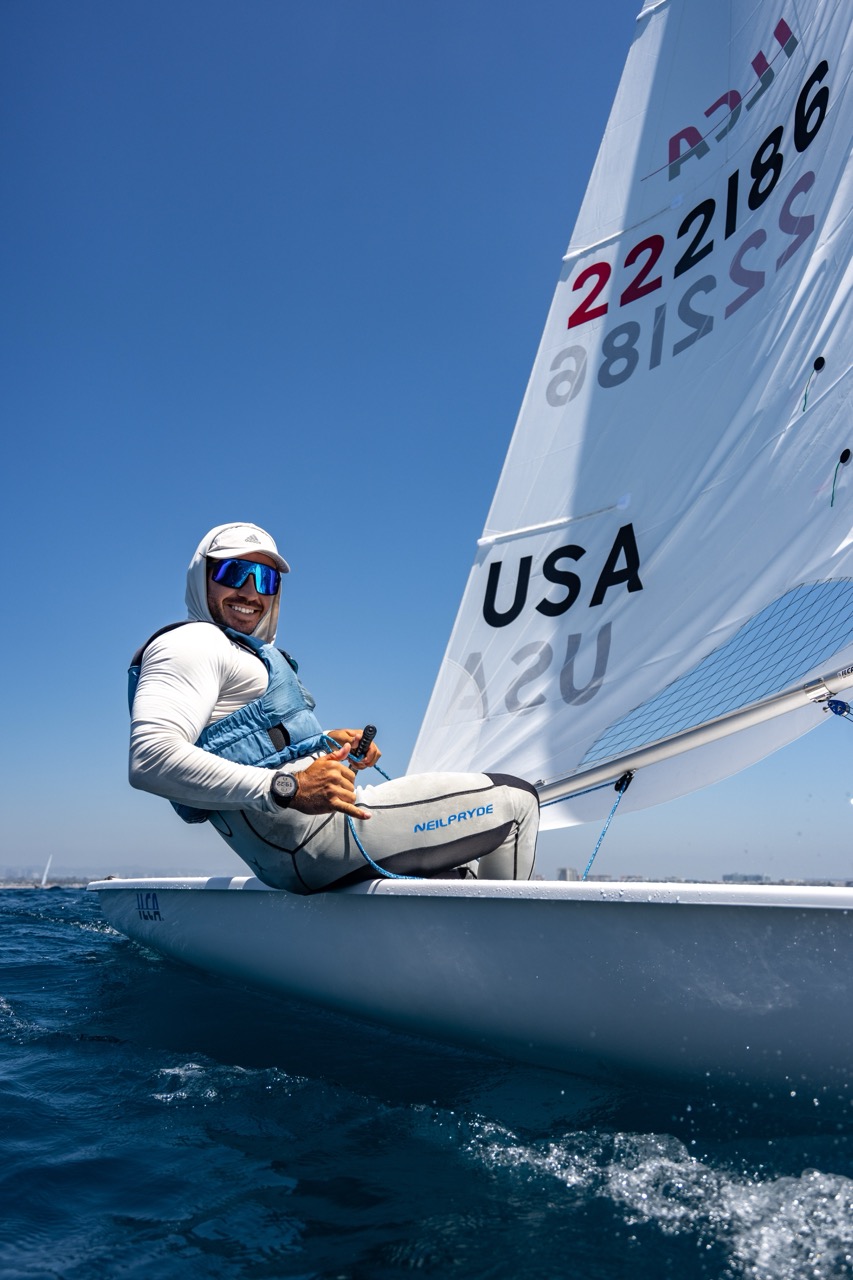
Julian Soto is a Los Angeles sailor whose current ILCA 7 campaign is aimed at representing the United States at the 2028 Olympic Games on the waters where he learned to sail. Team Soto describes the project as a local path to a home Olympics: Julian has sailed Los Angeles waters since 1998 and now splits his training between Marina del Rey, Long Beach and Alamitos Bay in Southern California and San Francisco Bay venues including Richmond Yacht Club and St. Francis Yacht Club.
His competitive sailing background stretches well beyond the current Olympic cycle. Julian sailed collegiately for the University of Hawai‘i at Mānoa. In singlehanded conference competition he finished fifth at the 2011 PCCSC Men’s Singles Championship and improved to third at the 2012 PCCSC Men’s Singlehanded Championship. He also worked in junior sailing in Marina del Rey through Del Rey Yacht Club’s program, building an early connection between his own racing and coaching other sailors.
Julian later returned to high-level ILCA 7 racing. At the 2022 ILCA 7 Men’s World Championship in Vallarta, Mexico, he raced in the 126-boat international fleet. His later results show a clear rebuilding trajectory. At Richmond Yacht Club’s 2024 Totally Dinghy regatta he won the 12-boat ILCA 7 fleet, scoring 3-1-1-2 across four races. In 2025 he finished ninth at the ILCA 7 Masters World Championship in Formia, Italy, and won one race in the 11-race series. In 2026 he continued that form on San Francisco Bay, finishing second overall and first apprentice at the ILCA Masters Pacific Coast Championship at Richmond Yacht Club before turning his attention to the ILCA 7 Men’s World Championship in Ireland.
Coaching and physical preparation are a substantial part of Julian’s sailing identity rather than a side note. He operates MindBodyBoat, a performance and personal-training practice connected directly to sailing. His University of Hawai‘i studies included sports nutrition, wellness and biomechanics, giving him an academic foundation for the physical side of singlehanded sailing. He has continued coaching on the water as well: Tahoe Community Sailing brought him in as a guest coach for its 2024 Laser clinics, and in 2026 he organized Bay Area ILCA training days through MindBodyBoat with a plan for multiple coaches working with groups of roughly 10–15 sailors out of Alameda Community Sailing Center and Richmond Yacht Club.
That coaching work reinforces the broader purpose of the Olympic campaign. Julian is not only training himself; he is helping create more structured ILCA training opportunities around the communities where he sails. His public writing also reflects that role. He has shared detailed race analysis from the 2026 Masters PCCs and written about the cultural and community side of American sailing, including his work building Charcuterie Yacht Club in San Francisco. His Linktree describes his projects as building communities through MindBodyBoat and sailing.
The 2026 season continues his progression into a full international campaign. Team Soto’s published plan calls for roughly four to six international regattas and three to five national events per year, with an annual campaign budget in the $45,000–$65,000 range. The campaign documents the gear, training data, costs, recovery, fitness work and day-to-day realities behind a self-funded Olympic effort, while pursuing the central objective of earning a place on the Los Angeles 2028 starting line.
The combination of international ILCA competition, recent race wins and championship results, a defined LA 2028 campaign, sailing-specific coaching, fitness expertise, community building and an active public platform gives Julian’s profile unusual breadth. Team Soto presents the Olympic campaign not simply as an athlete résumé, but as a Los Angeles sailing project built around performance, coaching and expanding the sailing community that shaped him.